
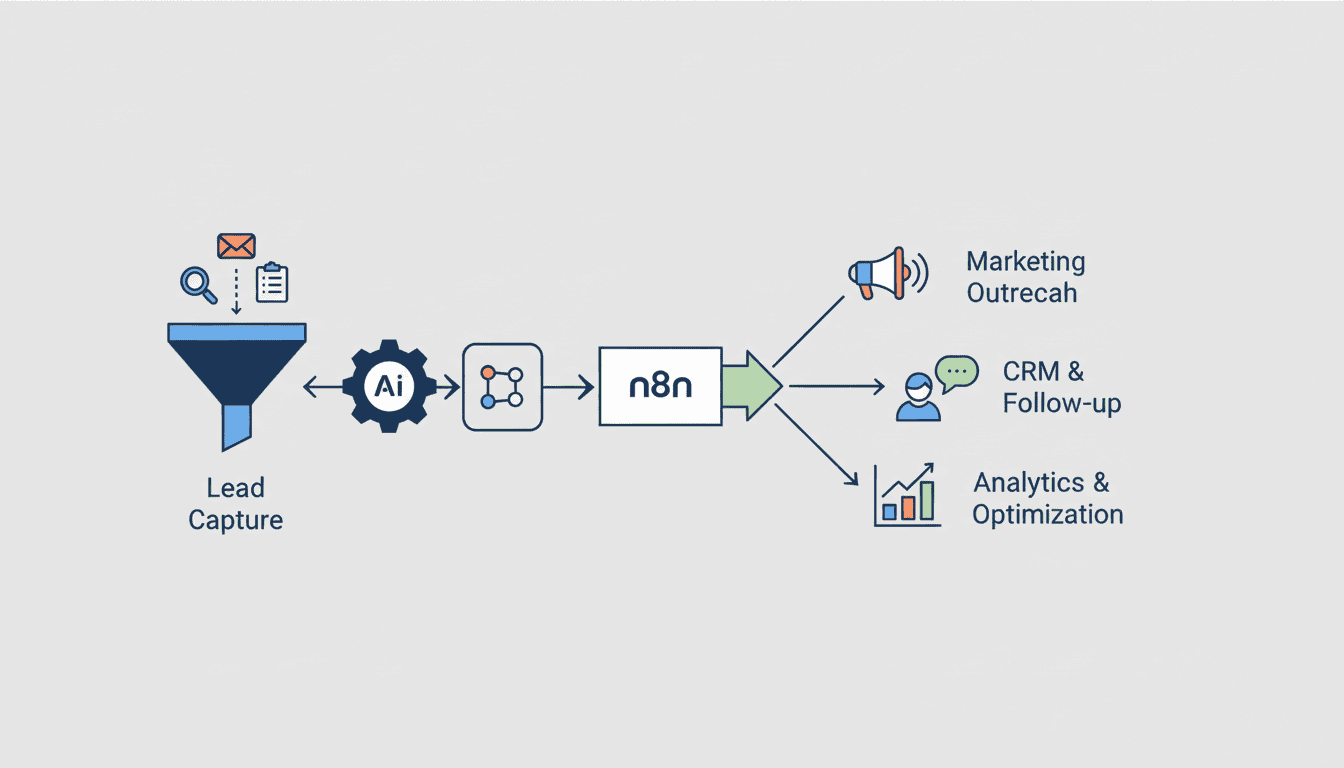
6 Powerful Lead Generation Automation Strategies for Small Businesses
For small businesses, generating a consistent flow of quality leads is essential for growth, but it can be time-consuming and resource-intensive. Lead generation automation offers a solution that can transform how small businesses attract and convert potential customers. By implementing the right automation strategies, you can capture leads around the clock, qualify them efficiently, and nurture them through your sales funnel—all while freeing up valuable time to focus on other aspects of your business. This guide explores practical lead generation automation strategies specifically designed for small businesses with limited resources but ambitious growth goals.
Implementing Lead Generation Automation
Lead generation automation involves using technology to capture, organize, and nurture potential customers without constant manual intervention. For small businesses, this approach can level the playing field against larger competitors by maintaining a consistent lead generation process even with limited staff.
Automating your lead generation efforts starts with understanding which touchpoints in your customer journey can benefit most from automation. These typically include website interactions, email communications, social media engagement, and lead qualification processes.
Choosing the Right Tools for Automation
Selecting appropriate lead generation automation tools is crucial for small businesses looking to maximize their marketing efficiency. The ideal solution should align with your specific business needs, budget constraints, and existing technology stack.
When evaluating lead generation automation tools, consider these key factors:
- Ease of use and setup process
- Integration capabilities with your current systems
- Scalability as your business grows
- Cost versus expected ROI
- Available customer support
Popular lead generation automation tools that work well for small businesses include:
| Tool Category | Examples | Best For |
| All-in-one CRM platforms | HubSpot, Zoho CRM, ActiveCampaign | Comprehensive lead management |
| Email marketing automation | Mailchimp, ConvertKit, SendinBlue | Nurturing leads through email sequences |
| Landing page builders | Unbounce, Leadpages, Instapage | Creating high-converting lead capture pages |
| Chat and chatbot tools | Intercom, Drift, ManyChat | Real-time visitor engagement |
Setting Up Automated Lead Capture Forms
Automated lead capture forms are the foundation of any lead generation automation strategy. These forms collect visitor information and feed it directly into your CRM or marketing automation system for immediate processing.
To effectively automate lead capture, follow these steps:
- Identify strategic placement opportunities on your website (homepage, blog posts, resource pages)
- Design forms that balance information gathering with user experience
- Create conditional logic to segment leads based on their responses
- Set up instant notifications for sales-ready leads
- Implement automated follow-up sequences based on form submissions
When creating automated lead capture forms, keep them concise while still gathering essential information. Research shows that forms with 3-5 fields typically achieve the highest conversion rates while providing enough data to automate lead qualification.
Streamlining Lead Qualification Automation
Once you’ve automated your lead capture process, the next challenge is efficiently determining which leads deserve immediate attention and which require nurturing. Lead qualification automation helps small businesses prioritize their limited sales resources by focusing on prospects most likely to convert.
Automated lead qualification saves significant time that would otherwise be spent manually reviewing each new lead. It creates a systematic approach to lead management that reduces human bias and ensures consistency in how potential customers are evaluated.
Defining Lead Qualification Criteria
Effective lead qualification automation begins with establishing clear criteria that align with your ideal customer profile. These criteria typically fall into categories represented by the BANT framework (Budget, Authority, Need, Timeline) or similar qualification models.
When defining your lead qualification criteria, consider:
- Demographic information (company size, industry, location)
- Behavioral signals (pages visited, content downloaded, time spent on site)
- Engagement patterns (email opens, webinar attendance, social interactions)
- Explicit interests (form responses, survey answers)
- Budget indicators and purchase authority
Translate these criteria into a scoring system that can be automated. For example, a B2B company might assign higher points to leads from specific industries, companies of certain sizes, or visitors who viewed pricing pages.
Utilizing AI for Lead Scoring
AI lead scoring represents the next evolution in lead qualification automation, leveraging machine learning algorithms to identify patterns that humans might miss. For small businesses, AI can provide enterprise-level lead scoring capabilities without requiring a large analytics team.
Modern AI lead scoring systems analyze both explicit data (information provided directly by leads) and implicit data (behavioral signals) to predict conversion likelihood. These systems continuously improve by learning from which leads ultimately become customers.
Key benefits of AI lead scoring for small businesses include:
- More accurate prediction of purchase intent
- Dynamic scoring that adjusts in real-time based on lead behavior
- Identification of previously unknown conversion indicators
- Reduction in time spent on leads unlikely to convert
- Scalable qualification process that grows with your business
Many CRM platforms now offer built-in AI lead scoring capabilities, making this technology accessible even to small businesses with modest budgets. Solutions like HubSpot, Salesforce Einstein, and Zoho Zia provide AI-powered insights without requiring technical expertise.
Building Effective Small Business Lead Funnels
Small business lead funnels create a structured path that guides potential customers from initial awareness to purchase decision. When automated, these funnels deliver relevant content and communications based on where each lead is in their buyer’s journey.
The advantage of automated lead funnels for small businesses is their ability to nurture relationships at scale. Rather than manually following up with each prospect, automated funnels maintain engagement through strategically timed touchpoints.
Designing a Lead Funnel for Your Business
Lead funnel design should reflect your unique customer journey while incorporating automation at key decision points. An effective lead funnel for small businesses typically includes these stages:
- Awareness: Attract prospects through automated content distribution, social media scheduling, and targeted ads
- Interest: Capture leads through automated forms and instantly deliver relevant resources
- Consideration: Nurture leads with automated email sequences and personalized content recommendations
- Evaluation: Facilitate decision-making with automated case studies, demos, or consultation scheduling
- Conversion: Streamline purchasing with automated quotes, proposals, or checkout processes
When designing your lead funnel, map out decision trees that determine what automated actions should trigger based on specific lead behaviors or characteristics. This creates personalized experiences without requiring manual intervention.
Best Practices for Optimizing Lead Funnels
Optimizing lead funnels involves continuous refinement based on performance data. Small businesses can significantly improve conversion rates by implementing these best practices:
- Set up conversion tracking at each funnel stage to identify bottlenecks
- Implement A/B testing for key automation elements like email subject lines or form designs
- Create segment-specific automation workflows based on lead sources or characteristics
- Establish re-engagement sequences for leads who become inactive
- Integrate sales team feedback into automation rules and scoring models
Regularly audit your automation workflows to ensure they reflect your current offerings and market positioning. As your small business evolves, your lead funnels should adapt accordingly to maintain relevance and effectiveness.
Resources
For small businesses looking to implement lead generation automation, these resources provide additional guidance:
- HubSpot’s free lead generation tools and educational resources
- ActiveCampaign’s automation recipe library
- Zapier’s integration directory for connecting lead generation tools, check our n8n vs Zapier comparison to help you decide which one may work for you.
- Buffer’s social media automation guides
- Leadpages’ conversion optimization blog
Many automation platforms offer free trials or scaled pricing for small businesses, allowing you to test capabilities before committing to a solution.
Conclusion
Lead generation automation represents a significant opportunity for small businesses to compete more effectively while maximizing limited resources. By implementing the right tools, establishing clear qualification criteria, and building optimized lead funnels, even businesses with modest budgets can create sophisticated lead generation systems.
The key to success lies in starting with a focused approach—automating one aspect of your lead generation process at a time—and gradually expanding as you gain confidence and see results. Remember that automation should enhance, not replace, the personal touch that makes small businesses special. The most effective automation strategies combine efficiency with authenticity, creating systems that feel helpful rather than robotic.
As you implement these lead generation automation strategies, continually measure their impact on your business goals. With the right approach, you’ll not only generate more leads but also convert a higher percentage of them into loyal customers.
Frequently Asked Questions
What is the most important element of lead generation automation for small businesses?
The most important element is integration between your various automation tools. When your lead capture forms, CRM, email marketing, and analytics platforms communicate seamlessly, you create a unified system that moves leads through your funnel without data loss or manual intervention.
How much should a small business invest in lead generation automation?
Small businesses should typically start with a modest investment (around 5-15% of their marketing budget) in core automation tools, then scale up as they see positive ROI. Many platforms offer tiered pricing that grows with your business, making initial costs manageable.
How can I measure the success of my lead generation automation efforts?
Key metrics to track include cost per lead, lead-to-customer conversion rate, customer acquisition cost, and overall marketing ROI. Additionally, monitor time saved through automation and how that time is redirected to higher-value activities.
Is it possible to over-automate my lead generation process?
Yes. Over-automation can create impersonal experiences that feel robotic to prospects. Balance automated touchpoints with opportunities for human interaction, especially at critical decision points in the customer journey.
How long does it typically take to see results from lead generation automation?
Most small businesses begin seeing efficiency improvements immediately, but measurable ROI typically emerges within 3-6 months as your automation workflows mature and you optimize based on performance data. Complex B2B sales cycles may require longer evaluation periods.