AI Automation for Small Businesses: Practical Use Cases & Tools
Small business owners are constantly seeking ways to do more with less. In today’s competitive landscape, AI automation for small businesses has emerged as a game-changer, allowing entrepreneurs to streamline operations, reduce costs, and focus on growth. This article explores practical applications of AI automation that can transform your small business, highlighting accessible tools and strategies that deliver real results without requiring technical expertise.
Understanding AI Automation for Small Businesses
AI automation for small businesses involves implementing intelligent systems that can perform repetitive tasks, analyze data, and even make decisions with minimal human intervention. Unlike enterprise solutions that require significant investment, today’s AI tools are increasingly affordable and accessible to businesses of all sizes.
What is AI Business Automation?
AI business automation refers to the use of artificial intelligence technologies to handle routine business processes with reduced human intervention. These systems use machine learning algorithms to understand patterns, learn from data, and improve their performance over time. Unlike traditional automation that follows rigid rules, AI automation can adapt to changing circumstances and handle exceptions more intelligently.
Core components of AI business automation include:
- Machine learning algorithms that improve with experience
- Natural language processing for understanding text and speech
- Computer vision for processing visual information
- Predictive analytics for forecasting trends and outcomes
Benefits of Automating Small Business Tasks
When you automate small business tasks, you unlock numerous advantages that directly impact your bottom line and competitive position:
| Benefit | Impact on Small Business |
| Time Savings | Reclaim 10-15 hours per week by automating repetitive tasks |
| Cost Reduction | Lower operational costs by 15-30% through efficient resource allocation |
| Error Reduction | Minimize human error in data entry and processing |
| Scalability | Handle increased workload without proportional staffing increases |
| Improved Customer Experience | Provide faster, more consistent service responses |
Small businesses that successfully automate routine tasks allow their team members to focus on higher-value activities that require human creativity, emotional intelligence, and strategic thinking.
Practical AI Workflows for Business
AI workflows for business represent end-to-end processes where artificial intelligence handles or assists with various stages of work. These workflows can transform how small businesses operate across departments.
Implementing AI in Daily Operations
Small businesses can implement AI tools for small businesses in numerous operational areas:
- Administrative Tasks: Automated email filtering, calendar management, and meeting scheduling using tools like Calendly and X.ai
- Content Creation: AI-powered writing assistants for marketing materials, social media posts, and product descriptions
- Financial Management: Automated bookkeeping, invoice processing, and expense categorization with platforms like QuickBooks with AI features
- Inventory Management: Predictive inventory systems that automatically reorder based on usage patterns and seasonal demands
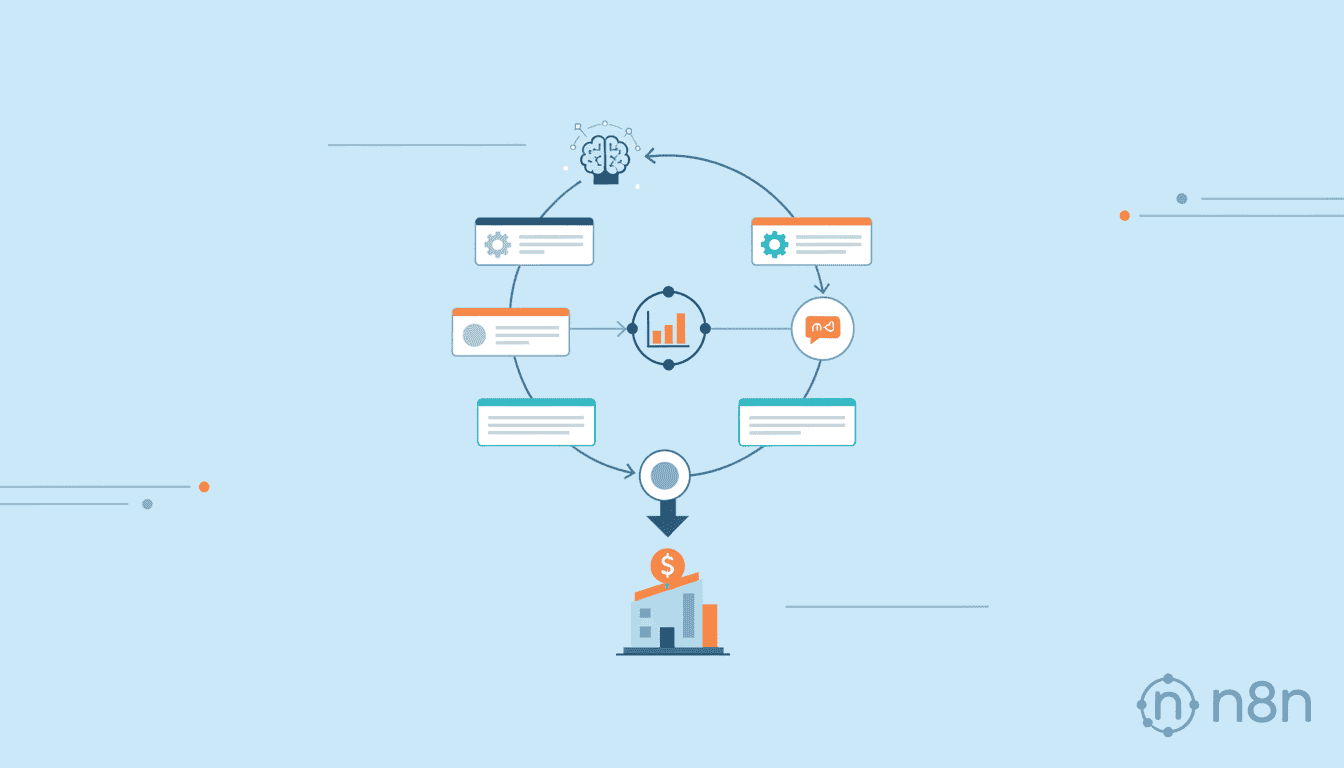
Using automation tools like n8n can help connect these various systems into cohesive workflows that minimize manual intervention. For example, n8n can help create workflows that automatically process new orders, update inventory, and trigger reordering when stock levels reach predefined thresholds.
Streamlining Customer Support with AI
Customer support is a prime area where automation for entrepreneurs can deliver immediate value:
- AI Chatbots: Handle common questions and issues 24/7, escalating complex matters to human agents
- Sentiment Analysis: Automatically detect customer frustration and prioritize responses accordingly
- Support Ticket Classification: Route queries to appropriate departments without manual sorting
- Follow-up Automation: Send personalized check-ins after service interactions
Many small businesses have found success by combining multiple AI tools into comprehensive AI agent workflows that can handle entire customer journeys from initial contact through resolution and follow-up.
Choosing AI Tools for Small Business Automation
The right AI tools for small businesses can dramatically accelerate your automation efforts while delivering a strong return on investment.
Top AI Tools for Automating Tasks
Here are some effective AI business automation tools accessible to small businesses:
- Zapier: Connect apps and automate workflows without coding knowledge
- n8n: Open-source workflow automation tool that connects with hundreds of services
- OpenAI’s ChatGPT: Natural language AI that can draft content, analyze information, and more
- Jasper: AI content creation platform for marketing materials
- Loom: Video messaging platform with AI transcription and summarization
- Otter.ai: Transcription and note-taking service for meetings
Implementing these tools with customized n8n workflow examples can help small businesses create powerful automation systems tailored to their specific needs.
How to Evaluate AI Automation Tools
When looking to automate small business tasks, consider these factors before investing in AI tools:
- Integration Capabilities: Does it work with your existing software and systems?
- Ease of Implementation: Can you set it up without specialized technical expertise?
- Scalability: Will it continue to meet your needs as your business grows?
- Cost Structure: Are pricing plans appropriate for small business budgets?
- Support and Training: Is adequate help available when you need it?
- Security and Compliance: Does it meet relevant data protection requirements?
Resources
Further Reading and Tools
Expand your knowledge about AI automation with these valuable resources:
- McKinsey’s Executive AI Playbook – Strategic insights for implementing AI in business
- AI Agent for Small Business – Step-by-step guide to building custom AI solutions
- Gartner’s Guide to Artificial Intelligence – Research-based approaches to AI implementation
- Make.com (formerly Integromat) – Visual automation platform for connecting apps and services
AI Automation Communities and Support
Connect with fellow entrepreneurs and experts through these communities:
- Reddit’s r/smallbusiness and r/artificial communities
- LinkedIn groups focused on small business automation
- Local Small Business Development Centers (SBDCs) offering technology adoption assistance
- Industry-specific forums where peers share automation success stories
Conclusion
AI automation for small businesses is no longer a future possibility—it’s a present-day competitive necessity. By strategically implementing AI tools to handle repetitive tasks, analyze data, and enhance customer interactions, small businesses can operate with the efficiency of much larger enterprises while maintaining the personal touch that sets them apart.
Start your automation journey by identifying the tasks that consume the most time with the least strategic value. Implement targeted solutions, measure the results, and gradually expand your automation footprint as you gain confidence and experience. With the right approach to AI automation, your small business can achieve more with less, freeing you to focus on growth and innovation.
Frequently Asked Questions
What are the most cost-effective AI automation tools for very small businesses?
For micro-businesses with limited budgets, tools like n8n (open-source), Zapier (with free tier), ChatGPT (affordable subscription), and Google Workspace with its AI features provide excellent value. Many offer free trials or limited free plans that can deliver significant efficiency gains even before upgrading.
How long does it typically take to see ROI from AI automation investments?
Most small businesses see positive ROI within 3-6 months of properly implementing AI automation. Time-intensive tasks like data entry, appointment scheduling, and basic customer service typically show the fastest returns, while more complex implementations may take longer to fully optimize.
Do I need technical expertise to implement AI automation in my small business?
Many modern AI tools are designed with non-technical users in mind, offering visual interfaces, templates, and guided setup processes. For basic to intermediate automation, technical expertise is rarely required. More complex integrations may benefit from occasional consultant support, but the ongoing operation can typically be managed by non-technical staff.
What business areas typically benefit most from AI automation?
Customer service, marketing content creation, appointment scheduling, data entry, invoice processing, and social media management typically show the highest impact from AI automation for small businesses. These areas usually involve repetitive tasks that AI can handle efficiently while delivering consistent quality.
How can I ensure my automated processes maintain a personal touch with customers?
Successful automation strategies balance efficiency with personalization. Use AI to handle routine aspects of customer interactions while preserving human touchpoints for relationship-building moments. Customize automated communications with personal details, and always provide clear paths to human assistance when customers prefer it.