How to Use AI for Email Marketing Automation (Step-by-Step)
Email marketing remains one of the most effective digital marketing channels, with an average ROI of $36 for every $1 spent. However, managing email campaigns manually is time-consuming and often inefficient. This is where AI email marketing automation comes in. By leveraging artificial intelligence to streamline and enhance your email marketing efforts, you can save time, increase engagement, and drive better results. In this comprehensive guide, we’ll walk you through exactly how to implement AI for email marketing automation, from understanding the basics to measuring success.
Understanding AI Email Marketing Automation
What is AI Email Marketing Automation?
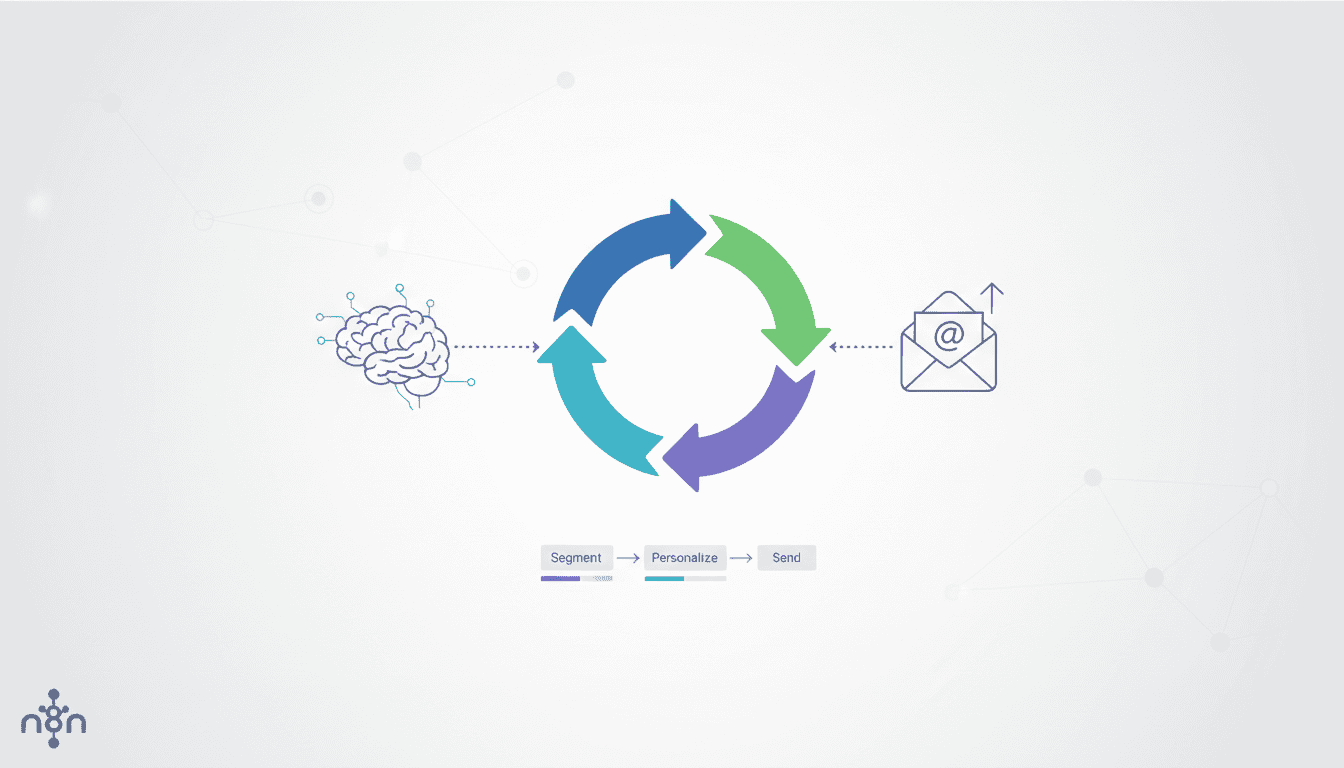
AI email marketing automation refers to the use of artificial intelligence technologies to automate various aspects of email marketing campaigns. Unlike traditional automation, which follows pre-set rules and workflows, AI-powered systems can learn from data, adapt to user behavior, and make intelligent decisions without human intervention.
These systems can handle everything from content creation and personalization to send-time optimization and audience segmentation. AI algorithms analyze vast amounts of customer data, including past interactions, purchase history, browsing behavior, and demographic information to deliver highly relevant, timely communications.
Benefits of Automating Email Marketing with AI
Implementing AI email marketing automation offers numerous advantages for businesses of all sizes:
- Enhanced personalization: AI can tailor content, product recommendations, and offers based on individual user preferences and behaviors
- Time savings: Automate repetitive tasks like list segmentation, A/B testing, and campaign scheduling
- Higher engagement rates: Send emails when recipients are most likely to open them
- Improved targeting: Identify the most responsive audience segments for specific campaigns
- Better content: Generate and optimize subject lines, body copy, and calls-to-action
- Continuous optimization: AI systems learn from each campaign to improve future results
Setting Up Your AI FOR Email MARKETING COMPAIGN
Choosing the Right Email Marketing Automation Tools
Selecting appropriate email marketing automation tools is crucial for successful implementation. The market offers various solutions with different AI capabilities:
| Tool Type | Features | Best For |
| All-in-one platforms | Comprehensive email marketing suite with built-in AI | Businesses wanting an integrated solution |
| AI-specific add-ons | Advanced AI capabilities that integrate with existing systems | Companies with established email platforms |
| Specialized AI tools | Focused on specific functions (e.g., subject line optimization) | Businesses looking to enhance particular aspects |
When evaluating email marketing automation tools, consider factors like integration capabilities, pricing model, learning curve, scalability, and the specific AI features that align with your goals.
Integrating AI with Your Existing Email Infrastructure
Once you’ve selected your AI tools, the next step is integration with your current email marketing systems. This process typically involves:
- Data migration or connection between platforms
- API integration to enable data flow between systems
- User permission settings and access controls
- Testing to ensure seamless operation
For most businesses, a phased approach works best. Begin by integrating AI into one segment of your email program, such as welcome sequences or abandoned cart emails, before expanding to your entire email marketing operation.
Creating Effective AI Email Sequences
Designing Personalized Email Content with AI
AI email sequences become powerful when they deliver personalized content tailored to individual recipients. Here’s how to leverage AI for content personalization:
- Dynamic content blocks: AI can insert different content modules based on user data and preferences
- Subject line optimization: AI tools can generate and test multiple subject lines to determine the most effective options
- Product recommendations: Algorithms analyze purchase history and browsing behavior to suggest relevant products
- Content generation: Some AI tools can create customized email copy, saving time while maintaining personalization
Utilizing AI for Predictive Analytics in Email Sequences
Predictive analytics represents one of the most valuable applications of AI in email marketing. These capabilities allow you to:
- Predict which customers are most likely to convert from specific campaigns
- Determine optimal send times for individual recipients
- Identify customers at risk of unsubscribing
- Forecast campaign performance based on historical data
- Recommend the next best action for each customer segment
To implement predictive analytics effectively, ensure your AI system has access to comprehensive, clean data. The more quality data you provide, the more accurate the predictions will be.
Automating Email Marketing for Small Businesses
Cost-Effective Strategies for Small Business Email Automation
Small business email automation doesn’t require enterprise-level budgets. Here are strategies to implement AI on a smaller scale:
- Start with freemium tools: Many platforms offer basic AI features in their free or lower-tier plans
- Focus on high-impact automation: Implement AI for your most important email sequences first (welcome emails, abandoned carts, post-purchase)
- Utilize templates: Most AI platforms provide pre-built templates that can be customized for your needs
- Consider AI writing assistants: These can help create engaging email copy without hiring additional staff
For small businesses, the key is starting small with the most impactful automations before expanding to more complex implementations.
Measuring the Success of Your AI Email Campaigns
To determine if your AI email marketing automation is delivering results, track these key metrics:
- Open rates and click-through rates compared to non-AI campaigns
- Conversion rates and revenue attributed to AI-powered emails
- Unsubscribe rates and spam complaints
- Time saved by automating manual processes
- Return on investment (ROI) of AI tools and platforms
Set up A/B tests comparing AI-generated content against human-created content to quantify the impact. Many AI email platforms offer built-in analytics dashboards to simplify this measurement process.
Resources
Recommended Tools and Software for AI Email Automation
These tools represent some of the leading options for AI email marketing automation:
- Omnisend: Offers AI-powered segmentation and campaign optimization
- Klaviyo: Features predictive analytics and automated flows
- ActiveCampaign: Includes machine learning for contact scoring and predictive sending
- Mailchimp: Provides AI-powered content recommendations and send time optimization
- Constant Contact: Offers AI-driven subject line suggestions and content blocks
- Phrasee: Specializes in AI-generated subject lines and email copy
Further Reading on AI and Email Marketing
To deepen your understanding of AI email marketing automation, explore these valuable resources:
- “Email Marketing Rules” by Chad S. White
- “AI for Marketers” by Christopher S. Penn
- Email Marketing Blogs: Really Good Emails, Litmus Blog, Email on Acid
- Industry Reports: Email Marketing Benchmarks from Mailchimp, Campaign Monitor, and GetResponse
- Online Courses: LinkedIn Learning and Udemy offer courses on email marketing automation
Conclusion
AI email marketing automation represents the future of email marketing strategy. By following the steps outlined in this guide, you can transform your email campaigns from manual, time-consuming processes into sophisticated, data-driven marketing assets that deliver personalized experiences at scale.
The key to success is starting with a clear understanding of what AI can do for your specific email marketing goals, selecting the right tools, and implementing changes methodically. Begin with smaller implementations, measure results, and gradually expand your use of AI as you become more comfortable with the technology.
Remember that while AI brings powerful capabilities to email marketing, the human element remains essential. Use AI to handle repetitive tasks and data analysis, freeing your team to focus on strategy, creativity, and relationship-building – areas where humans still excel.
Frequently Asked Questions
How much does AI email marketing automation typically cost?
Pricing varies widely based on features and list size. Entry-level solutions start around $20-50/month for small businesses, while enterprise solutions can cost thousands monthly. Many platforms charge based on subscriber count or email volume, with AI features sometimes offered as premium add-ons.
Do I need technical expertise to implement AI email marketing?
Modern AI email platforms are increasingly user-friendly, requiring minimal technical knowledge. Most offer visual builders and templates. However, more advanced integrations or custom solutions might require developer assistance or knowledge of APIs.
How long does it take to see results from AI email marketing?
Initial improvements in metrics like open rates can appear within weeks. However, more sophisticated AI systems improve over time as they gather more data, with significant performance gains typically emerging after 2-3 months of consistent use and optimization.
Can AI completely replace human email marketers?
No. While AI excels at data analysis, personalization, and automation, human marketers remain essential for strategy development, brand voice maintenance, emotional intelligence, and creative direction. AI is best viewed as a powerful tool that enhances human capabilities rather than replacing them.
What types of emails benefit most from AI automation?
Transactional emails, welcome sequences, abandoned cart reminders, re-engagement campaigns, and personalized product recommendations typically show the highest ROI when powered by AI, as they benefit significantly from timing optimization and personalization.